
The Illuminated Sounds
Product Design
Aug 2022 - Jan 2023
A new perspective to project sound
Background
As a music and speaker lover, I recently realized the demand for high-volume music consumption has increased with the popularity of rock, EDM, hip-hop, and rap (2023). Many users routinely raise playback levels to enhance immersion, often exceeding 85 dBA—the threshold where prolonged exposure begins to pose hearing risks. Thus, I wanted to create a speaker that can solve that issue while increasing the aesthetics of a speaker.
Current portable speaker:
Designs introduce additional limitations. Most compact speakers project sound primarily in a single direction, creating acoustic imbalance and forcing users to increase volume to compensate for uneven coverage.
Headphones:
while immersive, position sound directly near the ear canal, amplifying risk when used at high levels. Studies show a measurable increase in early hearing damage indicators among teenagers and young adults due to prolonged exposure to high-volume audio.
Market alternatives reveal a structural tradeoff. Small speakers prioritize portability but compromise sound depth and spatial immersion. Medium-sized speakers improve clarity but lack true multi-directional projection. Large home systems achieve superior 3D sound but are immobile and impractical for everyday transport.
My design Illuminated Sounds emerges from this gap: a system that combines spatial distribution, modular acoustic layering, and automatic volume stabilization to deliver immersive sound without escalating long-term auditory risk.
Idea + Prototyping
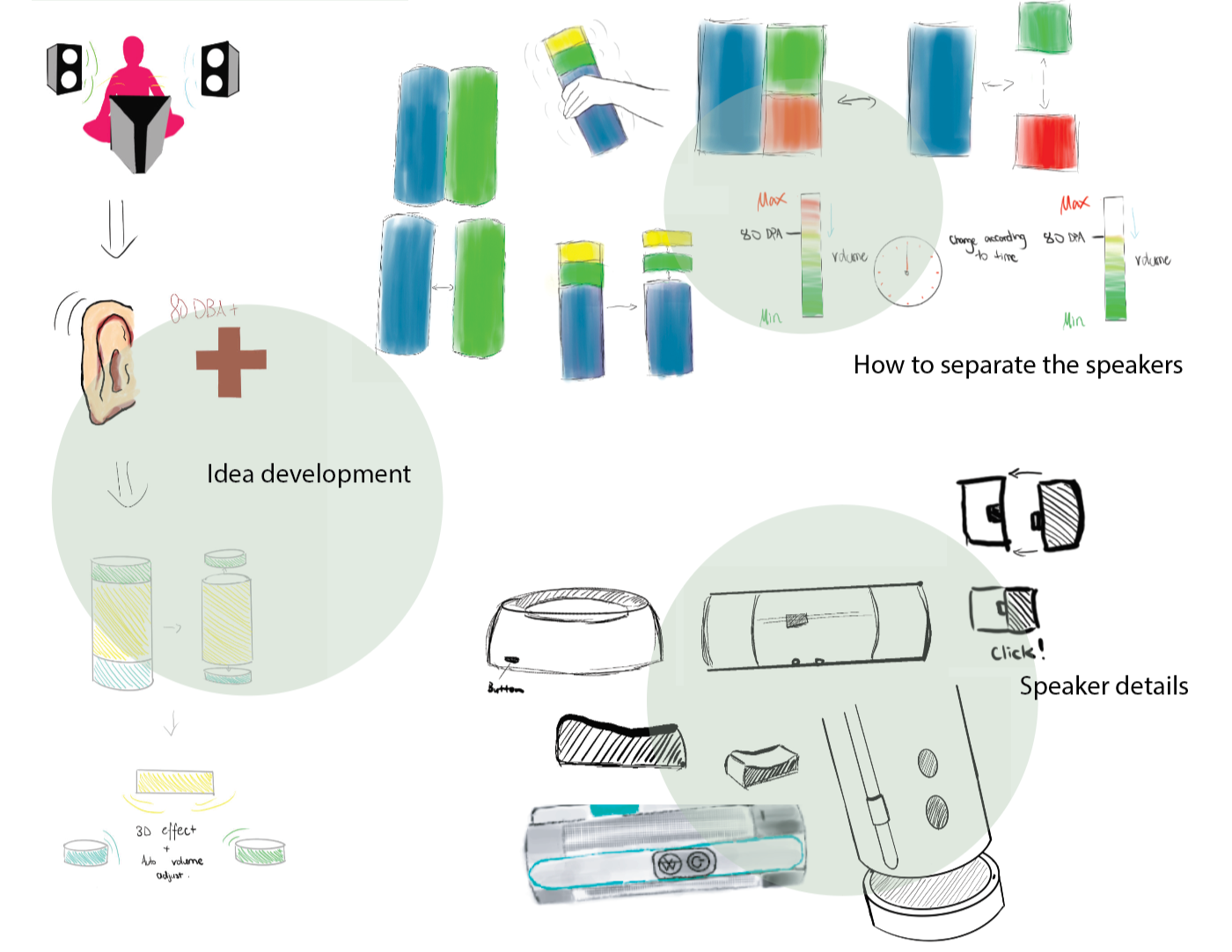
My imagination begins with sketch phase, I explores ergonomic handling, separable geometry, and acoustic zoning. The cylindrical structure is segmented into stacked units that can operate collectively or be repositioned. Visual development focuses on intuitive disassembly mechanisms and clear user interaction points. Separation logic is mechanical rather than decorative, emphasizing structural function.
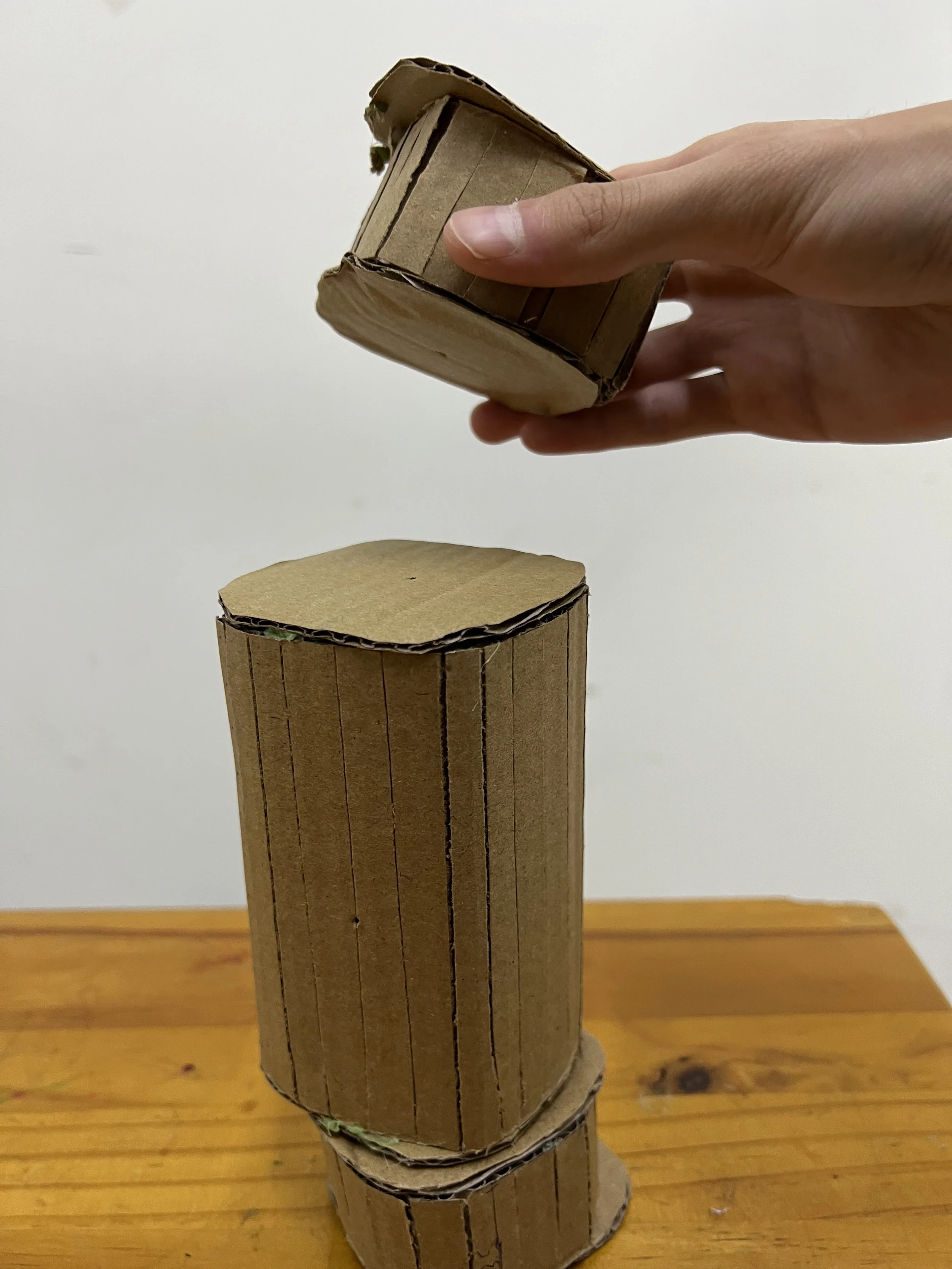
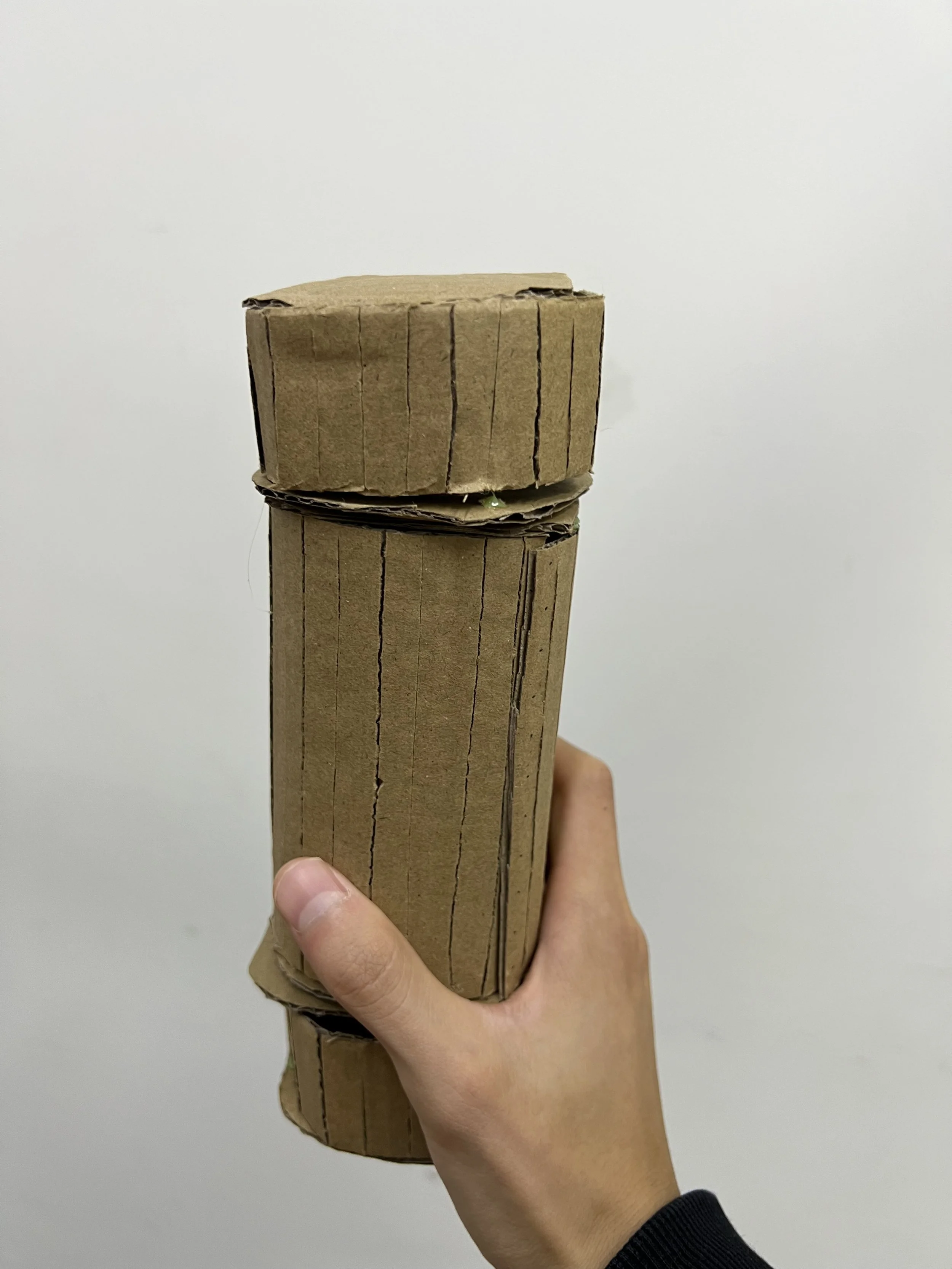
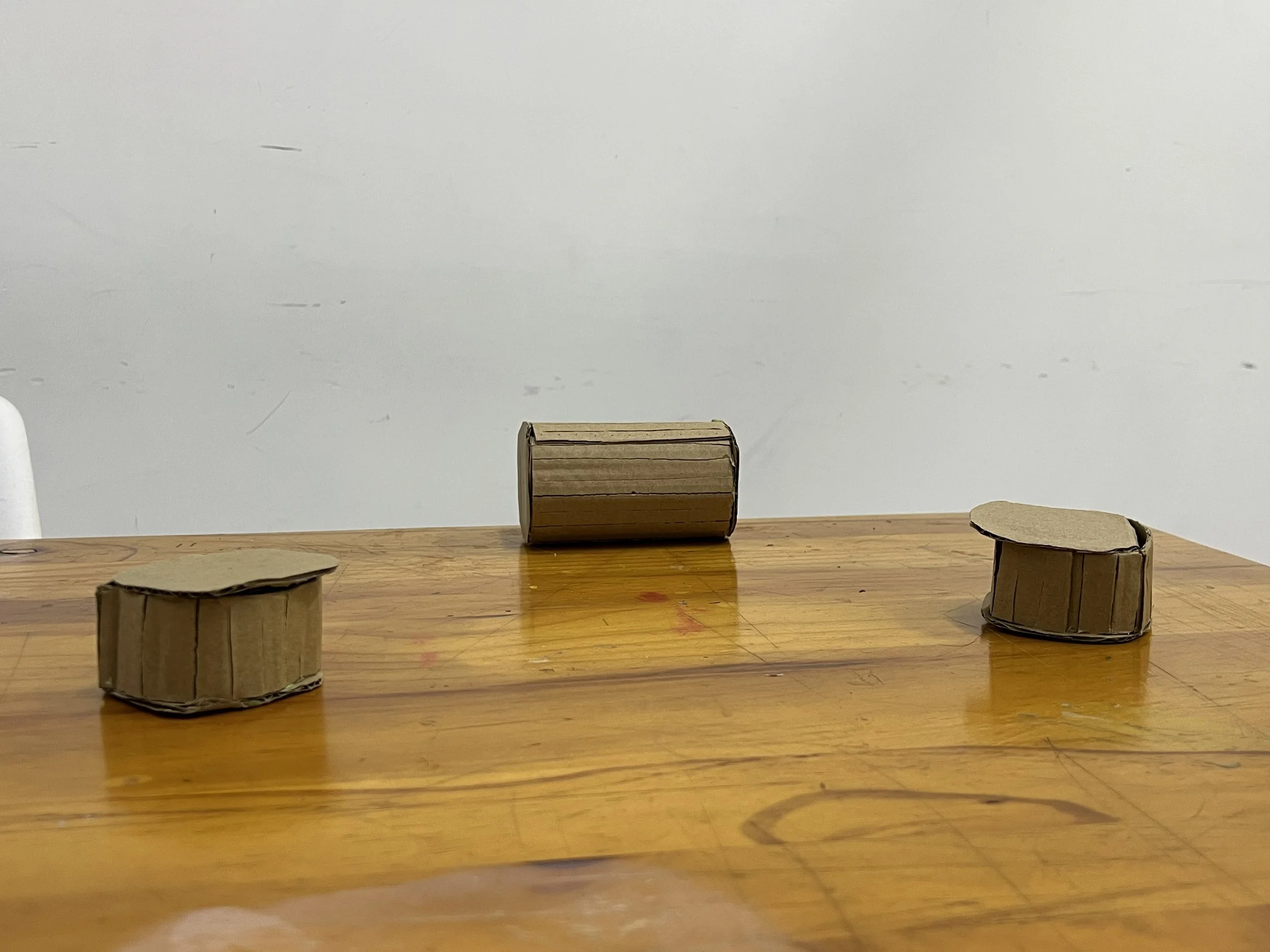
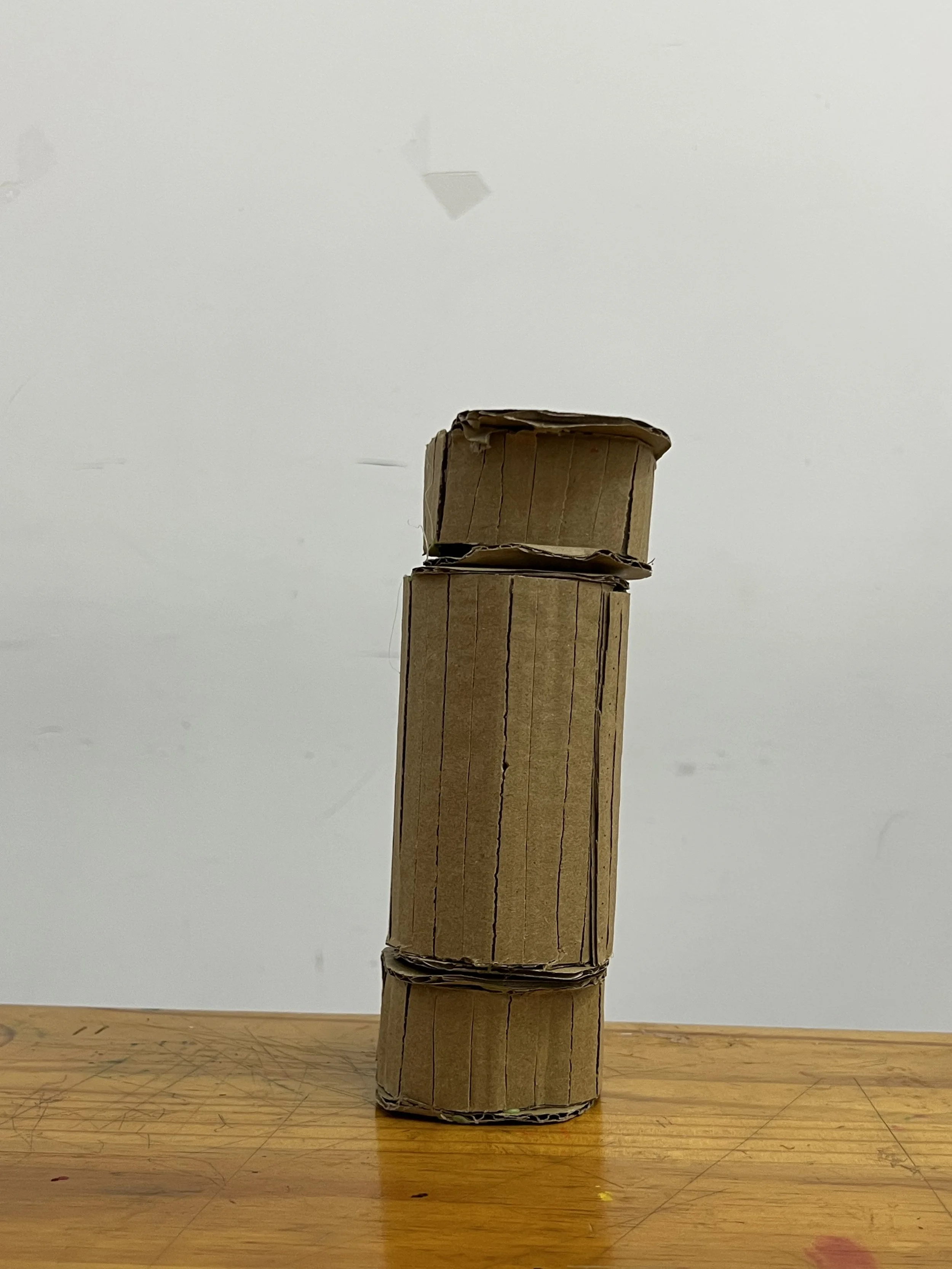
Then I move onto prototyping stage, wherevalidates scale and proportion through 1:1 cardboard modeling. Physical mockups confirm grip comfort, stacking stability, and separable module tolerances. Iterative modeling refines height-to-diameter ratio and confirms the feasibility of modular segmentation. The tangible prototypes demonstrate that the architecture is manufacturable and ergonomically viable.
Final Product
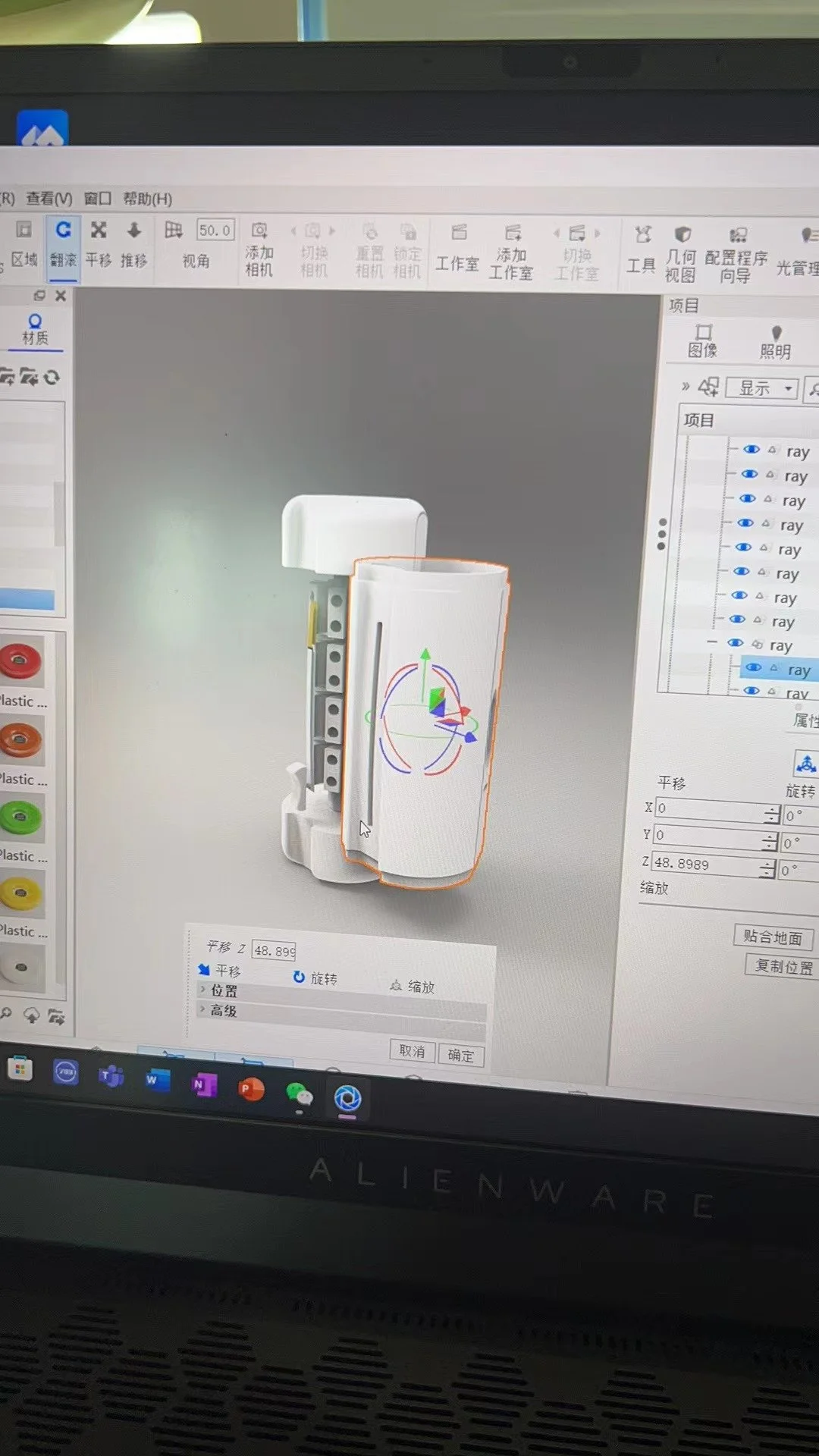
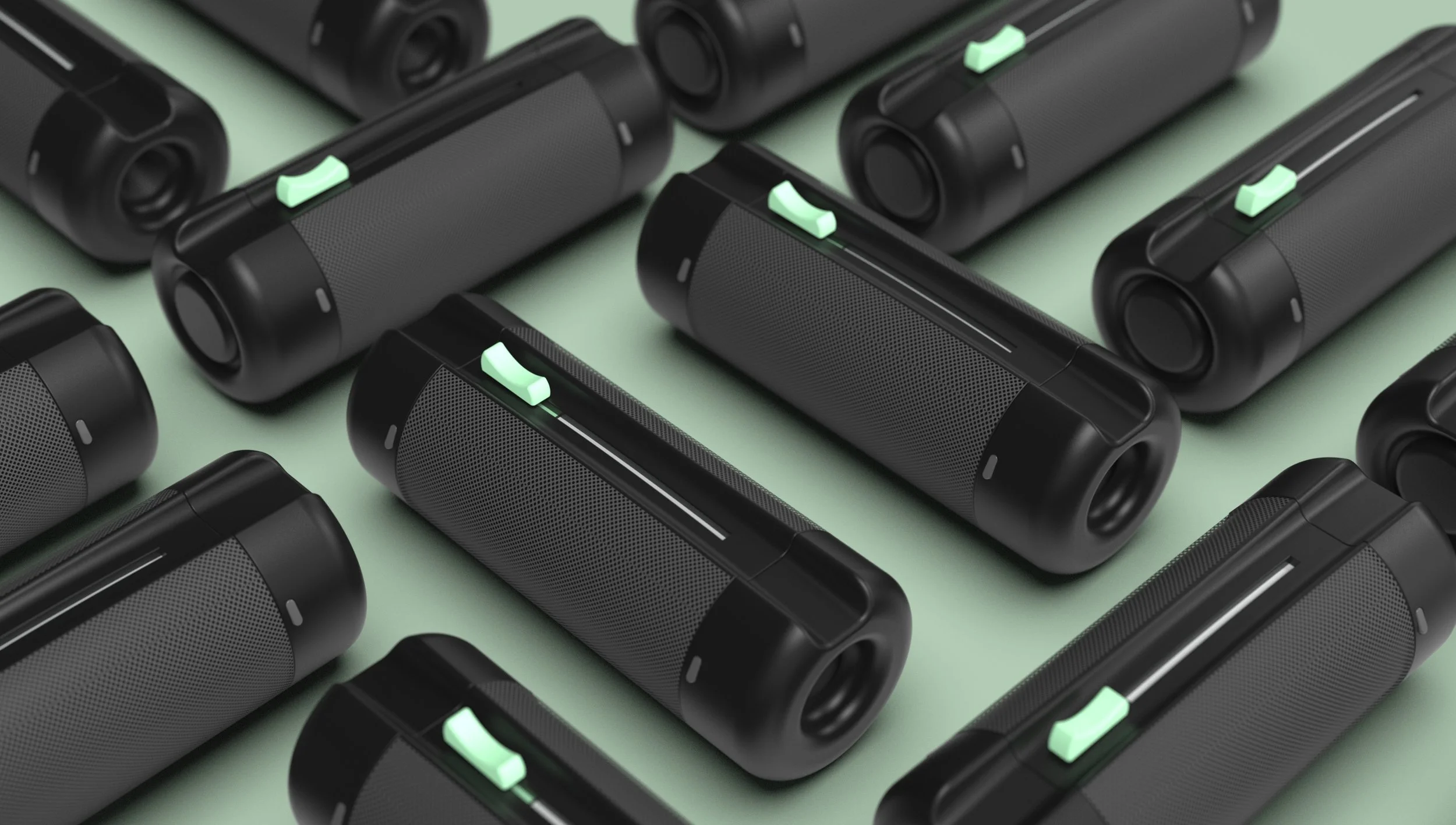
Lastly, using SolidWorks and Keyshot, I rendered the final product through testing multiple version of coloring.
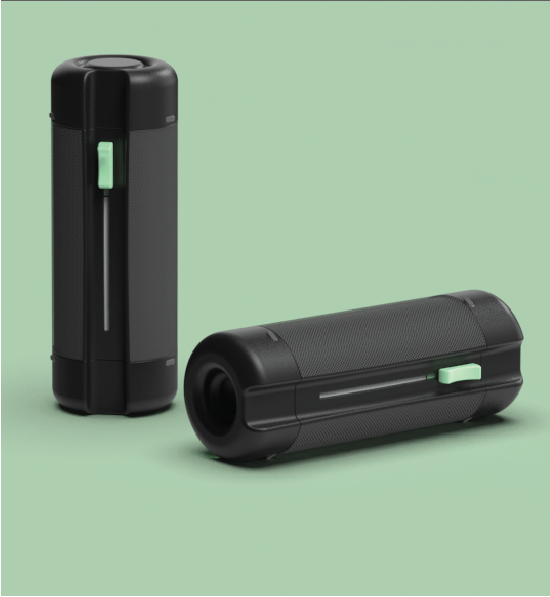
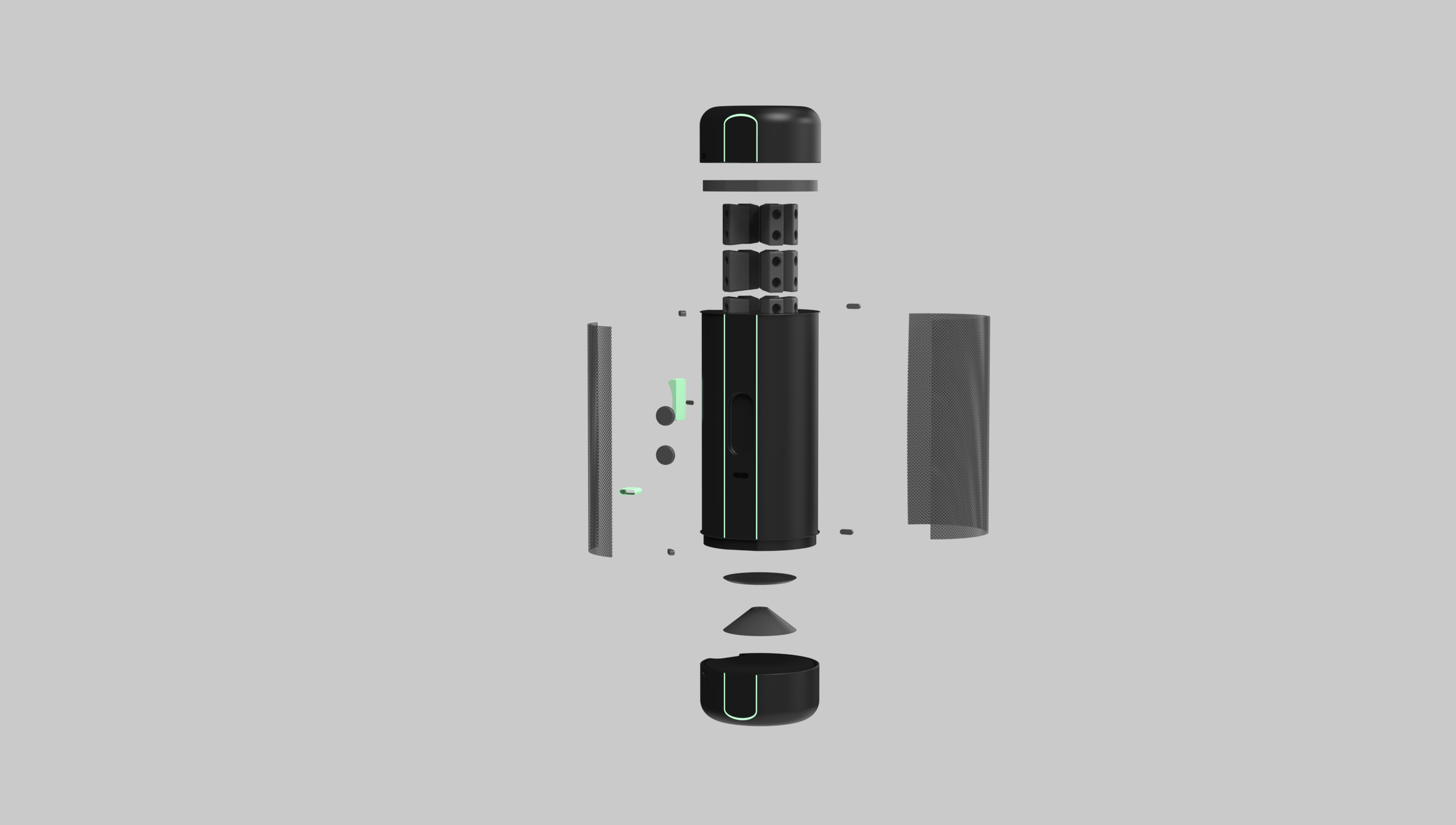
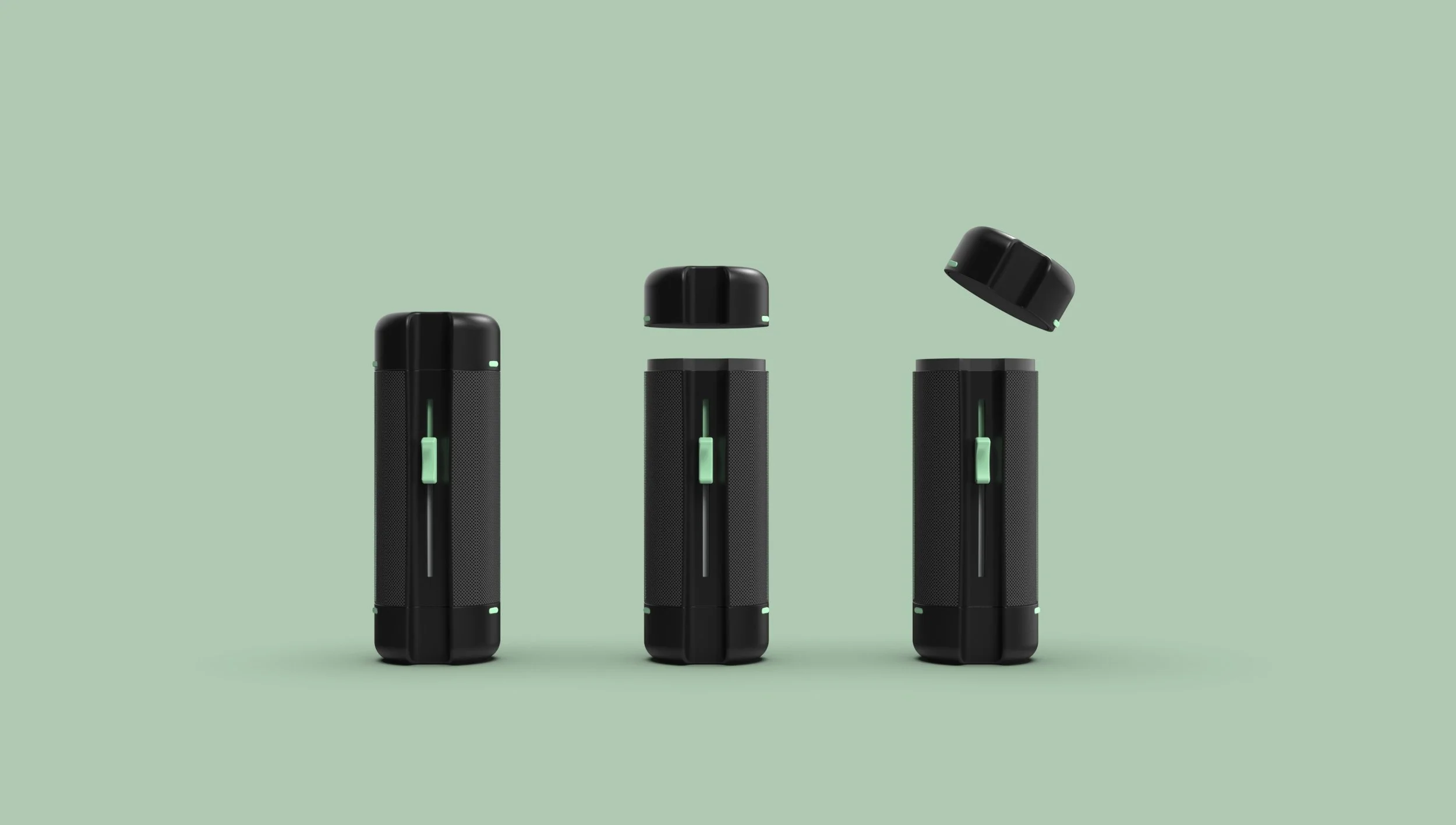
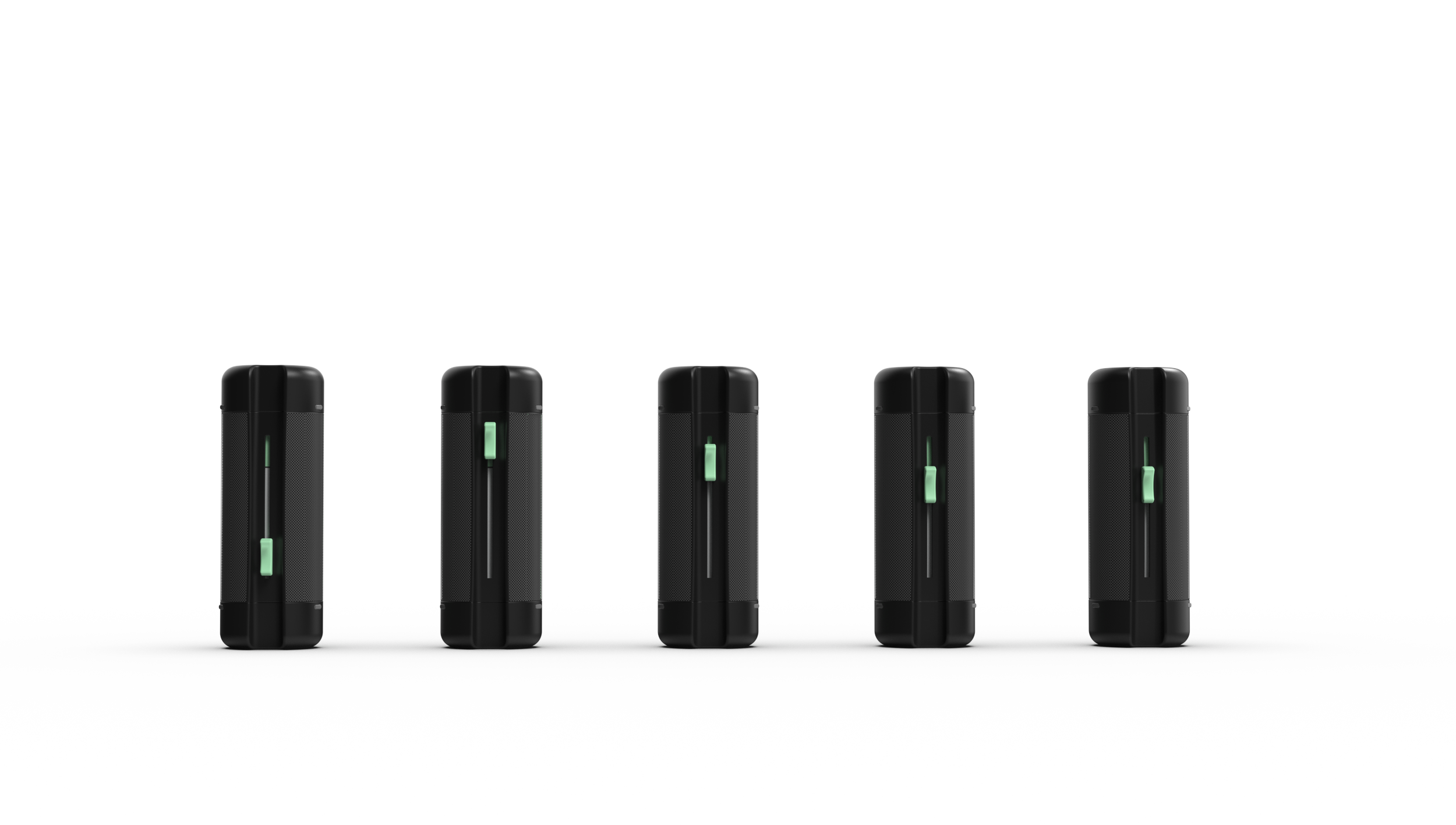
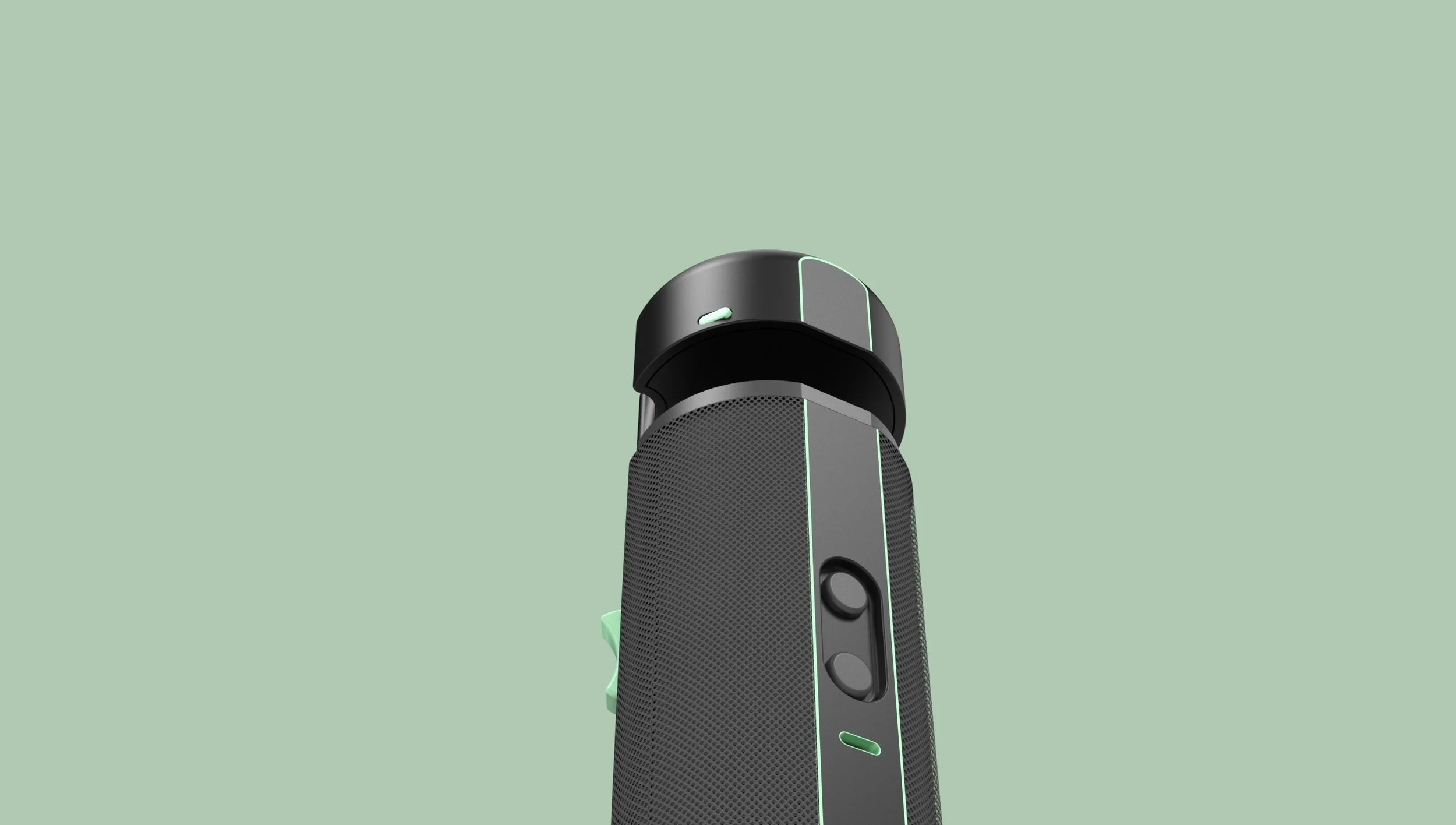
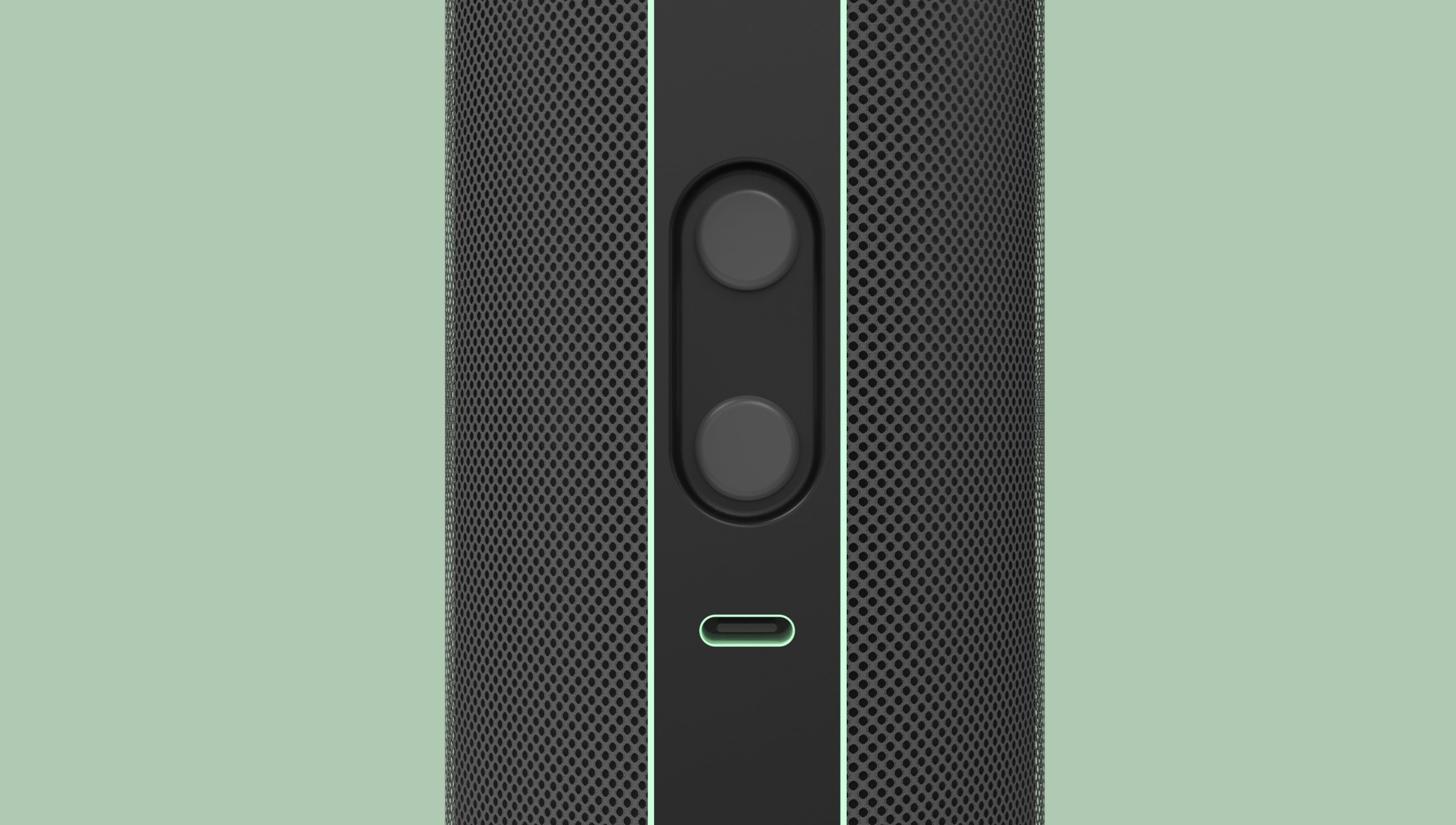
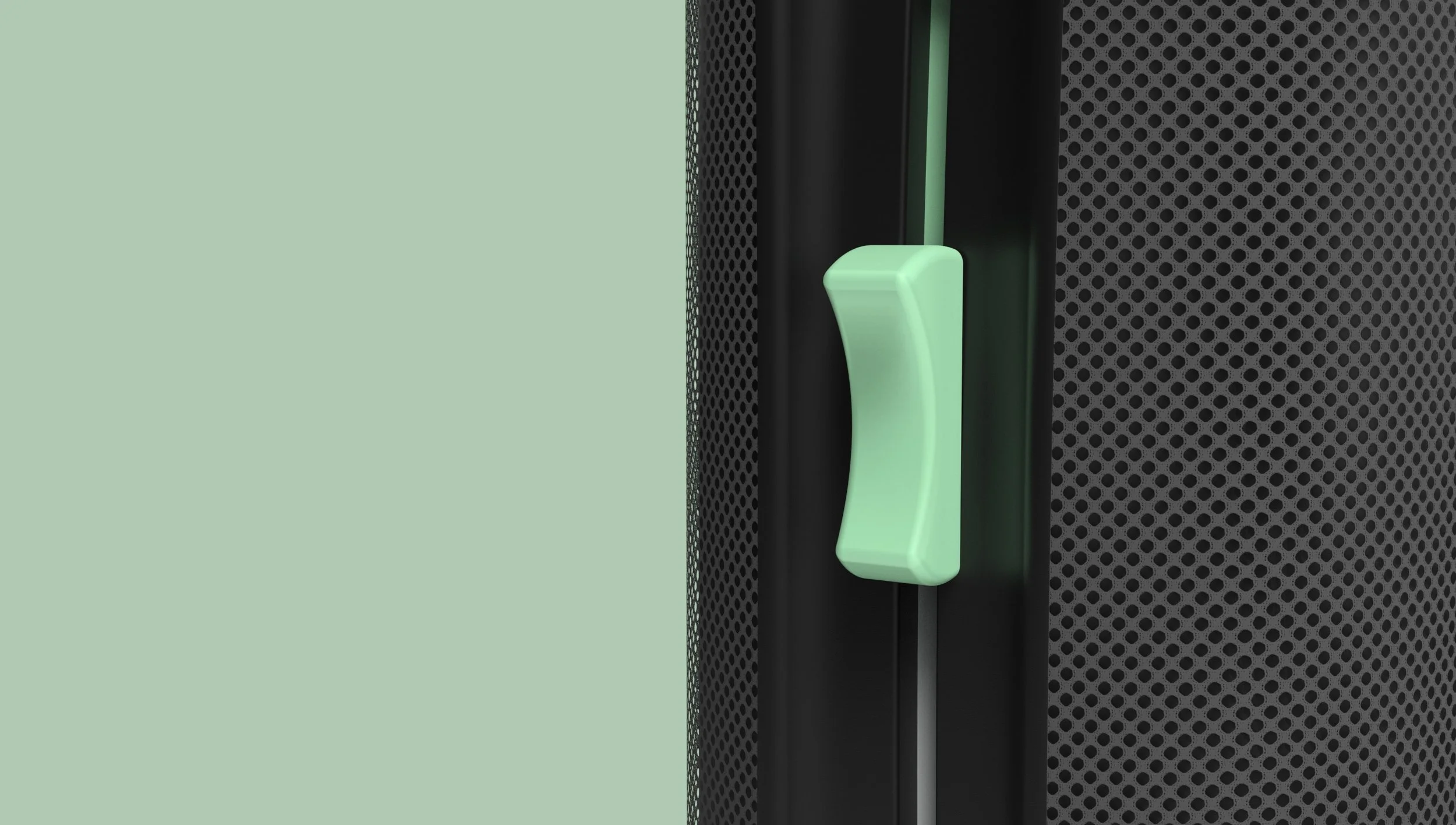
The goal of Illuminated Sounds is to engineer a compact, high-performance audio system optimized for spatial sound control and user safety. With a cylindrical form factor measuring approximately 180 mm in length and 65 mm in diameter, it balances acoustic volume with portability, making it suitable for both indoor and outdoor environments.
The device features a three-part detachable architecture. The top and bottom layers are removable, allowing the speaker to be dissected for maintenance, transport, or acoustic customization. Internally, the system is divided into functional acoustic zones: the middle section operates as a midrange driver, the top component functions as a subwoofer for low-frequency reinforcement, and the bottom section integrates a tweeter for high-frequency clarity. This tri-band separation enables a controlled 3D sound effect with improved depth and spatial distribution.
Scenario Rendering
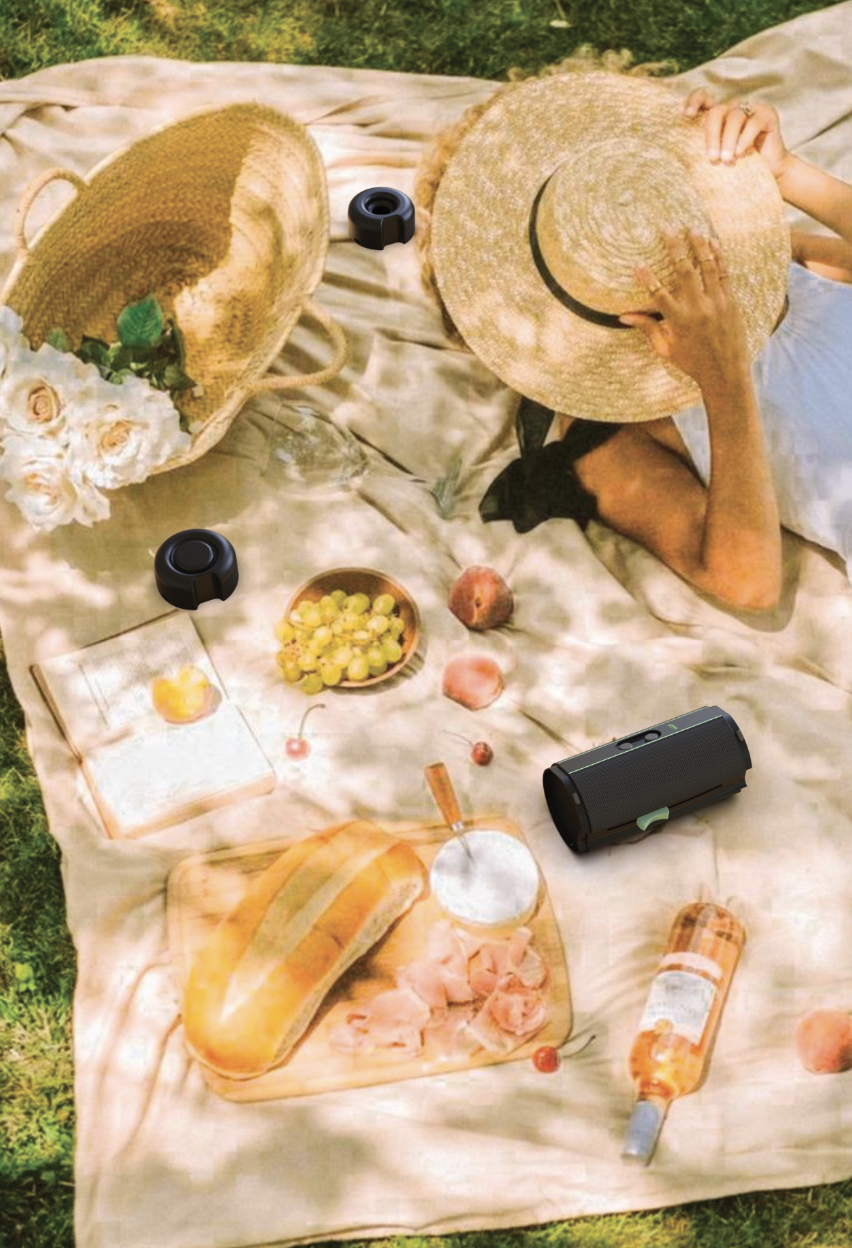
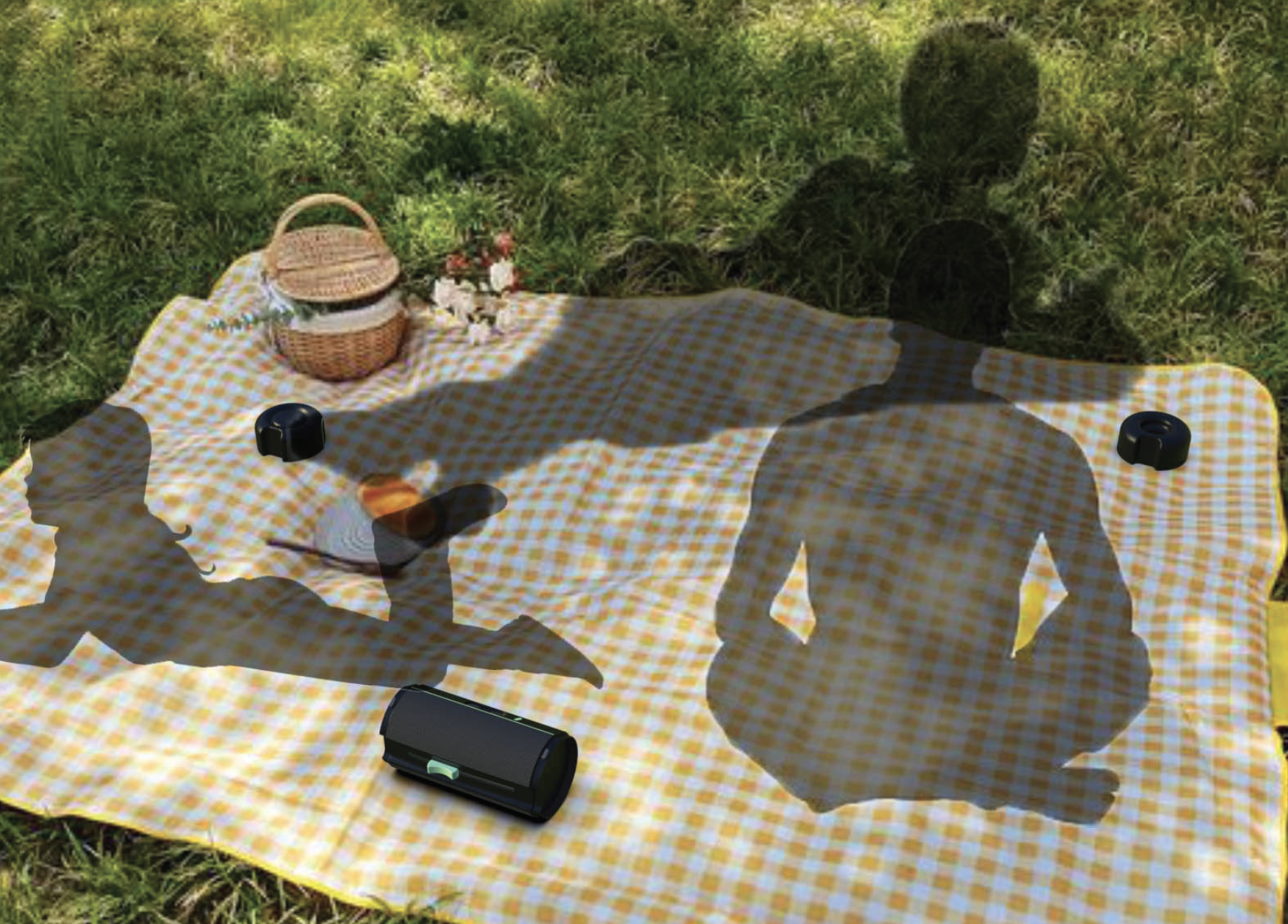
Designed for shared environments, the speaker directs sound within a defined listening radius, reducing peripheral noise spill. In outdoor scenarios, its optimized projection maintains clarity for listeners within proximity while minimizing disturbance to surrounding areas.
